
Product Description
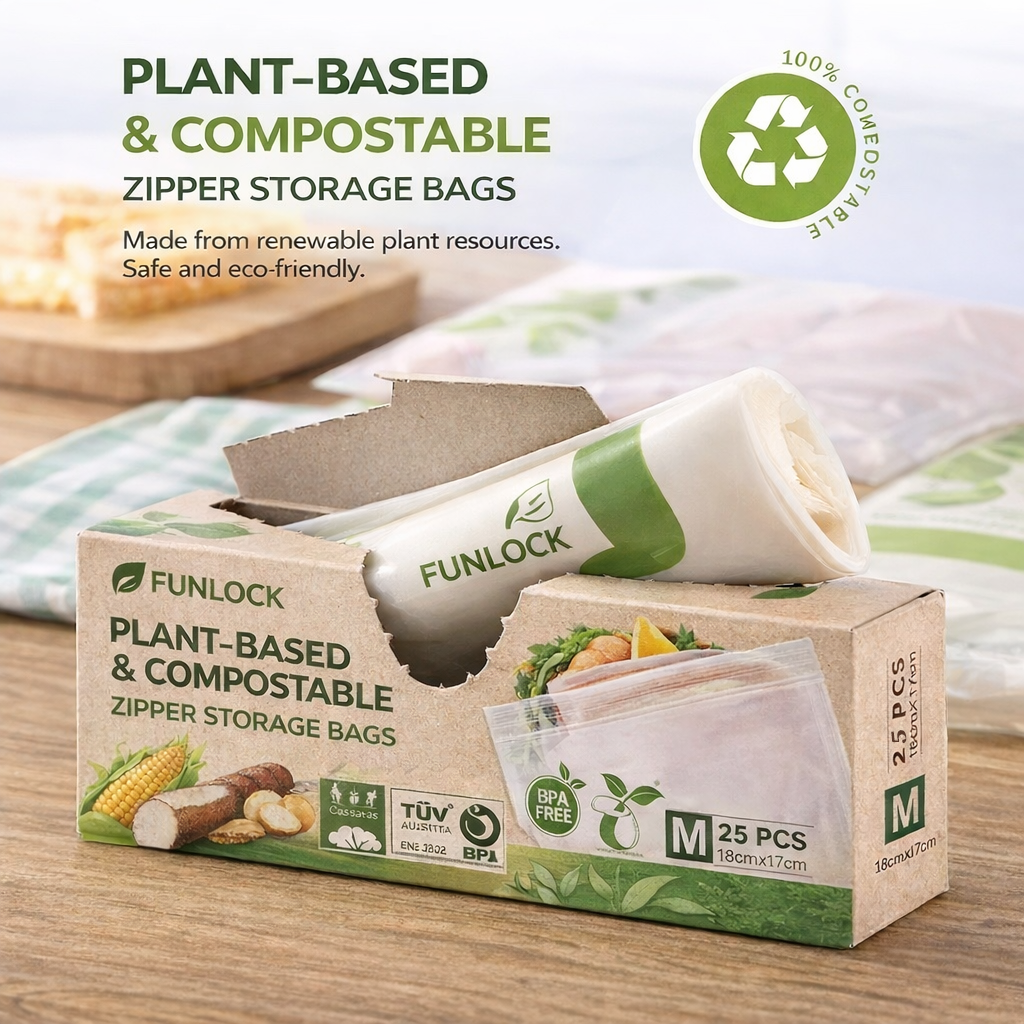
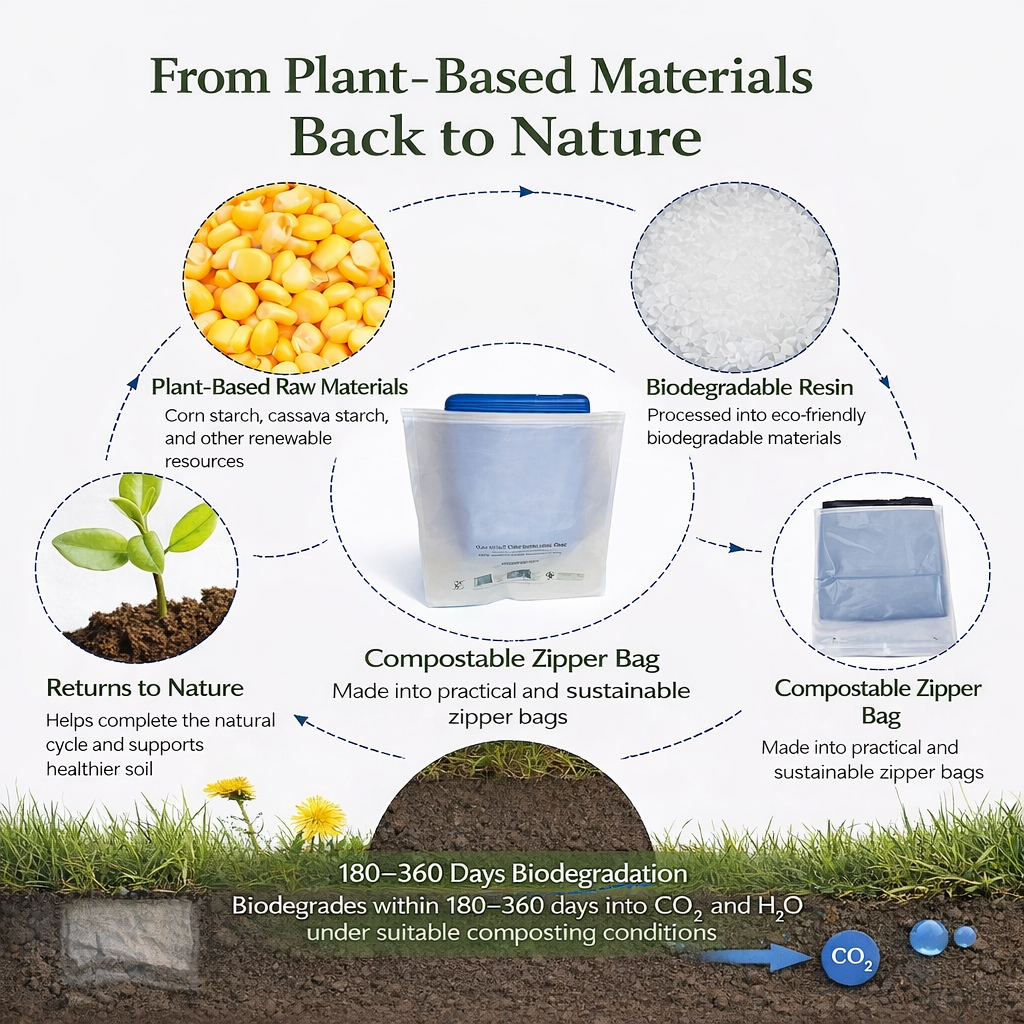
Our compostable zipper bags are manufactured using a balanced blend of PLA (Polylactic Acid) and PBAT to achieve both environmental sustainability and reliable performance. PLA is a plant-based material derived from renewable resources such as corn starch, while PBAT enhances flexibility, durability, and resistance to tearing—resulting in a material that is both practical and environmentally responsible.
Unlike conventional plastic bags that can persist in the environment for decades, our compostable materials are designed to break down under suitable composting conditions into carbon dioxide (CO₂), water (H₂O), and biomass, without leaving harmful residues. This significantly reduces long-term environmental impact and supports more sustainable waste management practices.
The material structure is engineered to provide a good balance between strength and usability, ensuring that the bags can perform reliably in everyday applications while maintaining their eco-friendly properties. Compared to traditional plastics such as PE and PP, this compostable solution helps reduce dependence on fossil-based materials and contributes to lowering plastic pollution.
By combining renewable resources with compostable technology, our zipper bags offer an effective and responsible packaging alternative for environmentally conscious brands and consumers seeking to reduce their ecological footprint.
Key Features
Compostable Materials
Designed to break down under composting conditions.
Helps reduce environmental impact compared to traditional plastic bags.
Eco-Friendly Solution
Supports sustainable packaging and storage needs.
Ideal for environmentally conscious consumers.
Practical Storage Use
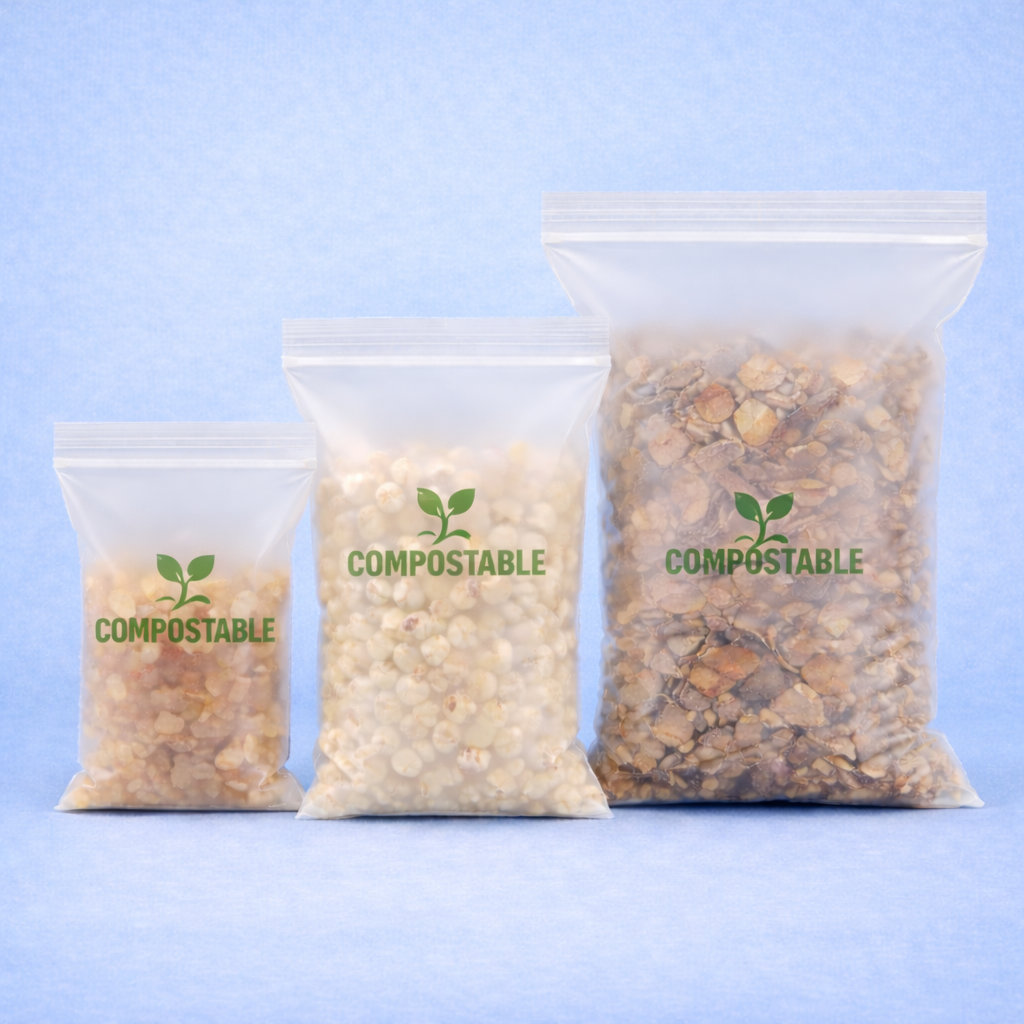
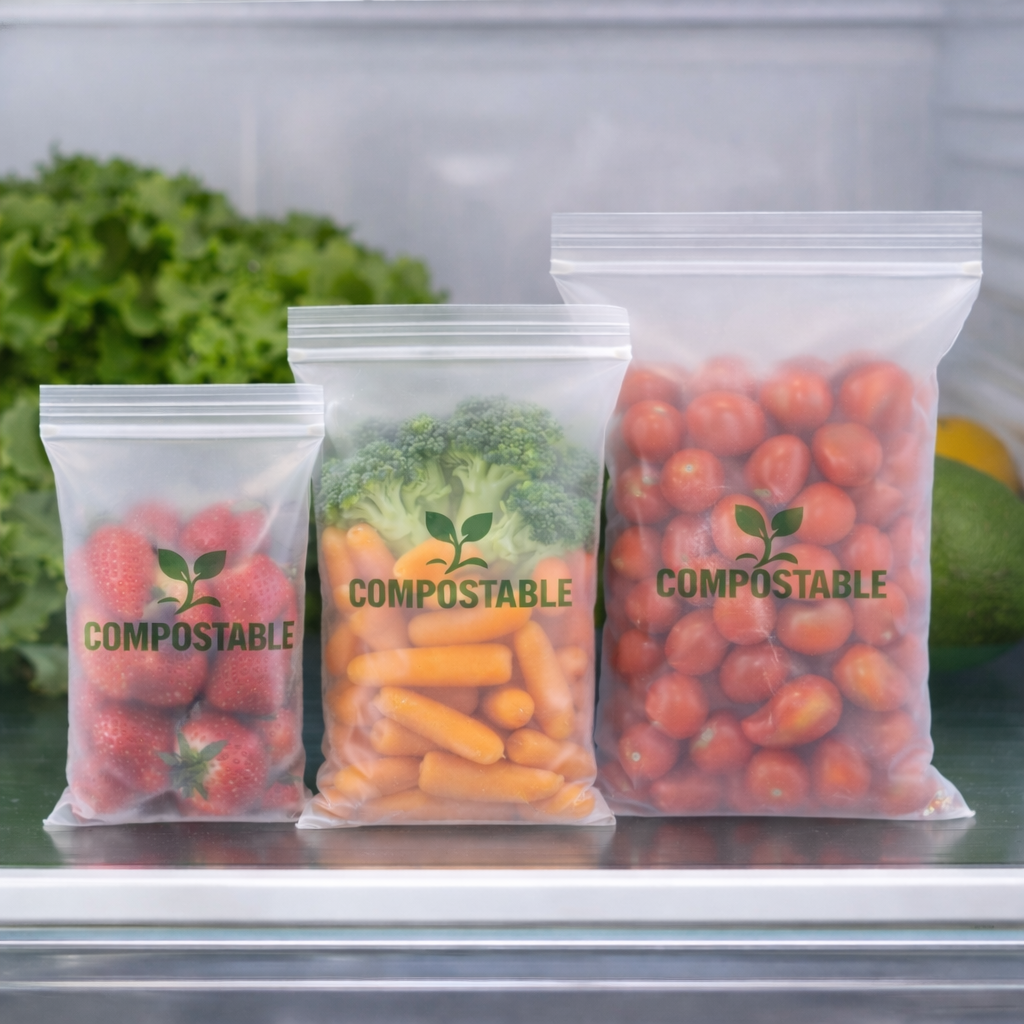
Suitable for storing dry foods, snacks, and grains.
Can also be used for general household storage.
More about our products
Compostable zipper bags are made from a blend of PLA and PBAT to achieve the ideal balance between sustainability and performance.
PLA (Polylactic Acid) is a plant-based material derived from renewable resources such as corn starch. It provides a more sustainable foundation compared to traditional petroleum-based plastics.
However, PLA alone is naturally rigid and brittle, which limits its use in flexible packaging applications.
PBAT (Polybutylene Adipate Terephthalate) is a biodegradable polymer that adds flexibility, toughness, and tear resistance. It allows the material to perform similarly to conventional plastic bags while remaining compostable.
By combining PLA and PBAT, the material gains both environmental benefits and practical usability—ensuring that the bags are not only eco-friendly, but also strong, flexible, and suitable for everyday use.
How to Use
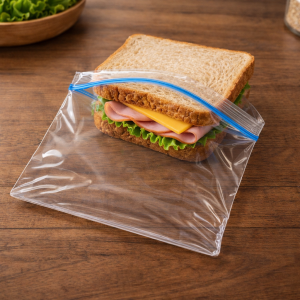
1. Place food or items inside the bag.
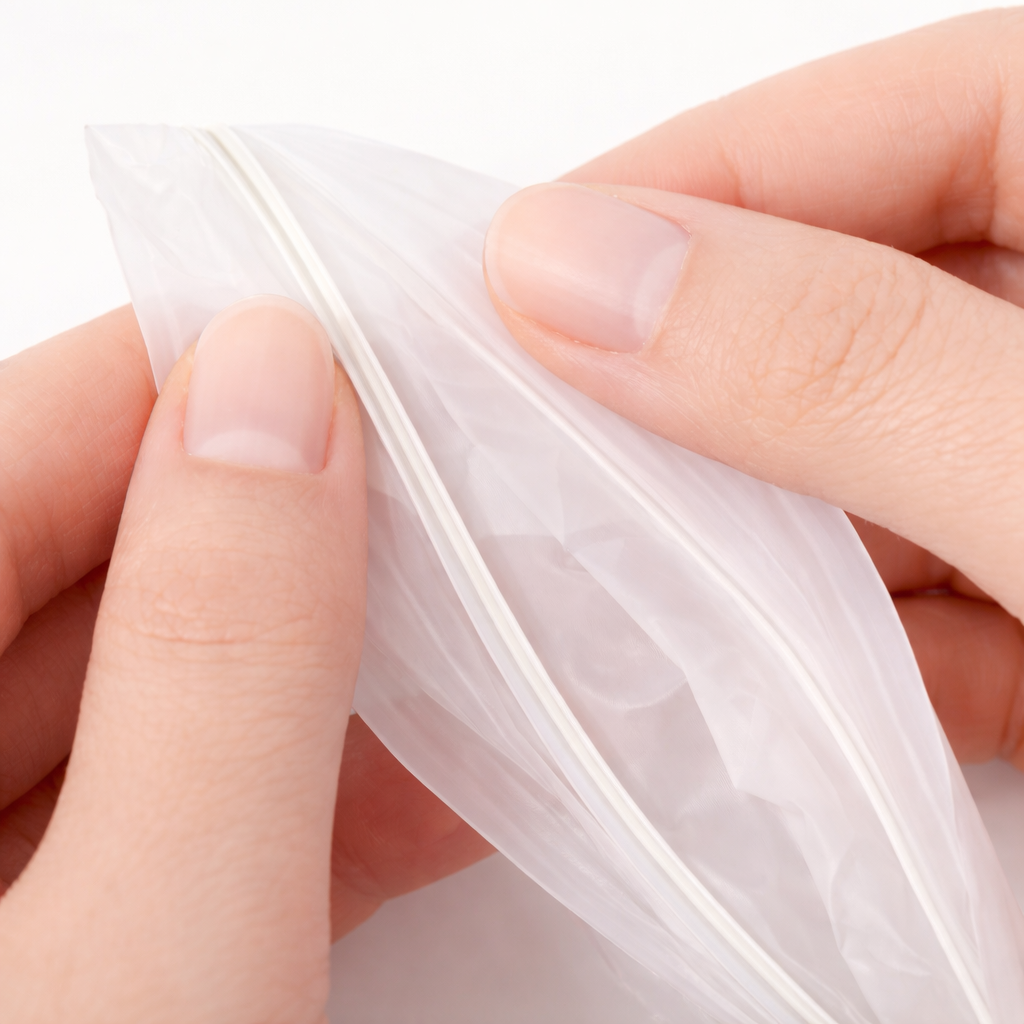
2. Align the zipper tracks and press them together firmly from one side to the other.
3. Run your fingers along the zipper to ensure the seal is completely closed.
4. Store in the refrigerator, freezer, or pantry as needed.
Usage & Safety Instructions
Microwave Use – Defrost & Reheat
Open the zipper about 1 inch to allow steam to vent.
Proper Storage
Do not overfill the bag. Ensure the zipper is fully sealed before storing.
Child Safety Warning
The small slider may become loose or detached. Keep away from small children and dispose of immediately to avoid choking hazards.